The Different Types of Wind: A Guide for Sailors

Wind is one of the biggest factors in sailing and has a huge impact on navigation. But not all wind is the same. If you want to spot weather changes early and get more out of your boat, it pays to understand the different types of wind. Here's a look at the most important ones and what they mean for you as a sailor.
The three key types of wind
You can look at wind from different perspectives. The three terms that matter most are:
- Ground wind: the wind relative to the earth
- True wind: the wind relative to the water
- Apparent wind: the wind you actually feel on a moving boat
Ground wind
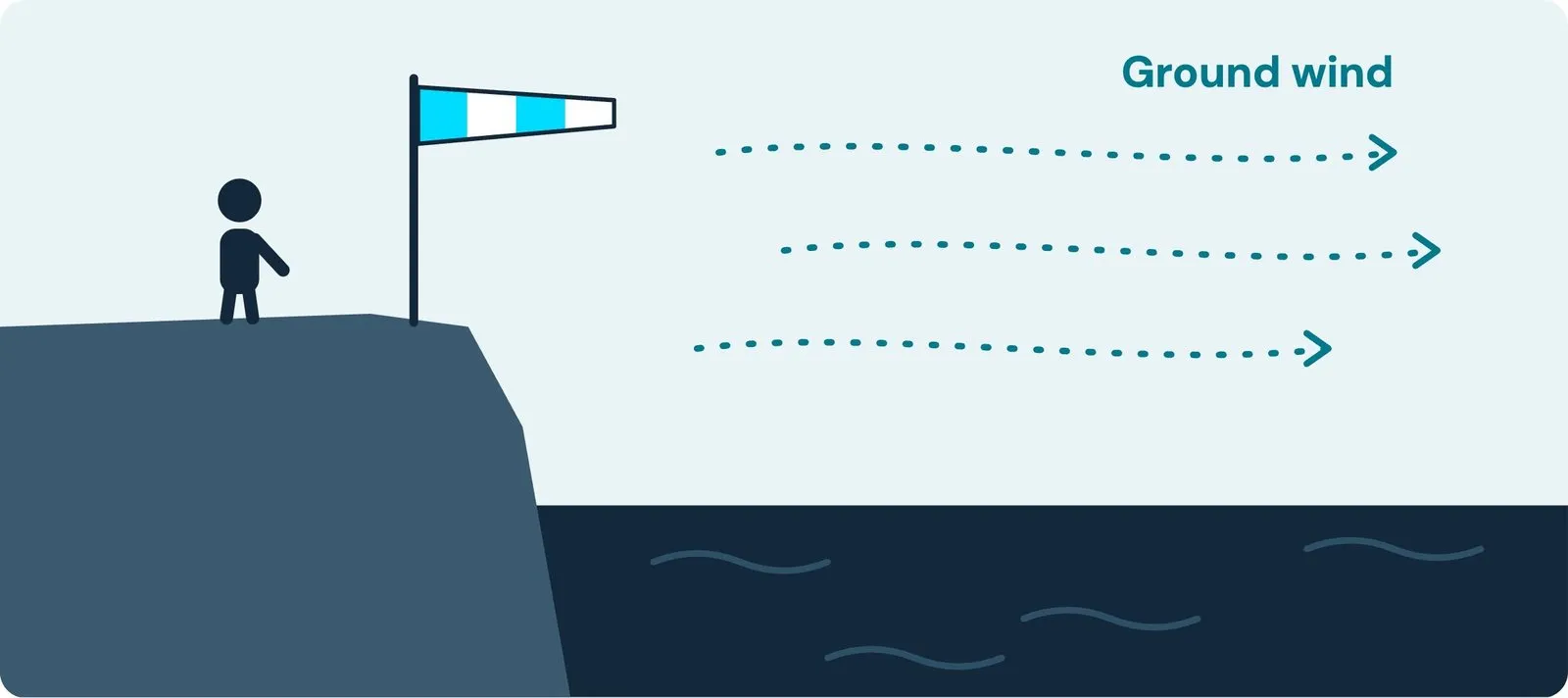
Ground wind describes the wind relative to the earth. It tells you where the wind is coming from over the ground and how fast it’s blowing. This is basically what you’d observe on land or in a harbour. It doesn’t take the boat’s movement into account.
Example: Picture yourself standing in an open field, feeling the wind on your face. That’s ground wind, the wind you feel while standing still.
Ground wind values:
- GWS (Ground Wind Speed): the speed of the ground wind.
- GWA (Ground Wind Angle): the angle between the ground wind and your course over ground.
- GWD (Ground Wind Direction): the direction of the wind over ground relative to true north.
Good to know: When you’re standing on land, the wind you feel is the ground wind. As soon as you step onto a moving boat, the wind you feel changes.
True wind
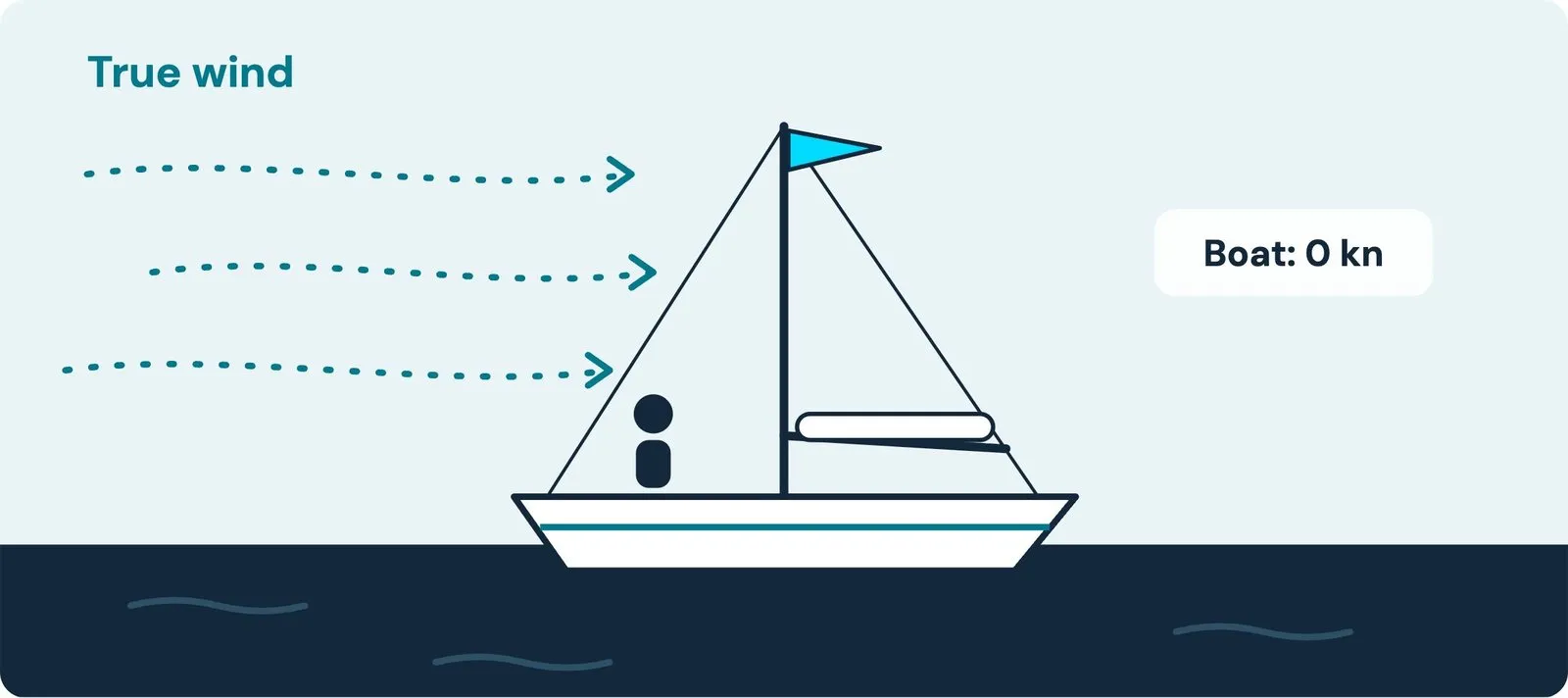
True wind describes the wind relative to the water, regardless of the boat’s movement. Ground wind, on the other hand, describes the wind relative to the earth. Currents can make the two differ. True wind is what your boat would feel if it weren’t moving. For the weather itself, ground wind is what counts most.
Example: Imagine your boat lying still in the water. The wind you’d feel at that moment is the true wind.
True wind values:
- TWS (True Wind Speed): the speed of the true wind.
- TWA (True Wind Angle): the angle of the true wind relative to the boat.
- TWD (True Wind Direction): the direction of the true wind relative to the earth.
Good to know: As soon as the boat starts moving, the wind you feel on board changes. The faster you go, the further forward the apparent wind comes. That’s why the wind on board can feel different from the actual wind.
Apparent wind
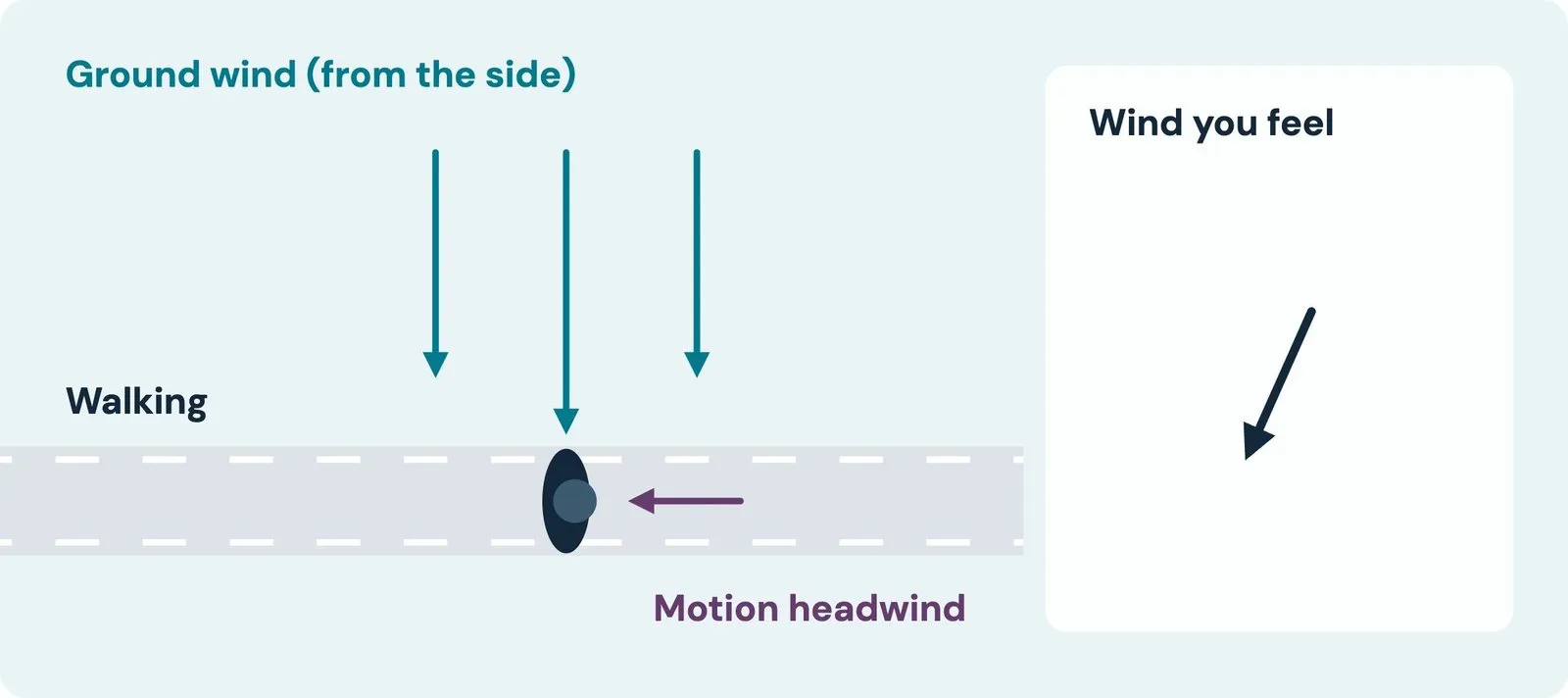
Apparent wind is the wind you actually feel on board. It’s the result of true wind combined with the boat’s speed. This is the wind that matters for sail trim and getting the best performance out of your boat.
Example: Imagine you’re running. The faster you go, the more you feel the wind coming from ahead, even if it’s actually blowing from a different direction. That’s apparent wind.
Apparent wind values:
- AWS (Apparent Wind Speed): the speed of the apparent wind.
- AWA (Apparent Wind Angle): the angle of the apparent wind relative to the bow.
Good to know: The faster the boat moves, the further forward the apparent wind shifts. Example: The faster you ride a bike, the more the wind feels like it’s coming from ahead, no matter where it’s actually blowing from.
In the Smartboatia app, you’ll see the apparent wind as well as the ground wind (GWS and GWD), which the Hub calculates itself from your wind sensor and GPS.
Why understanding the types of wind matters
Knowing the difference between ground wind, true wind and apparent wind helps you in several ways:
- Read weather changes better
- Trim your sails more effectively
- Make smarter tactical calls
For accurate wind data, the accuracy and alignment of your sensors matter too. Modern navigation systems help correct possible deviations and deliver precise wind data.
Bottom line
Understanding the difference between ground wind, true wind and apparent wind helps every sailor. Apparent wind is key for sail trim, while ground wind gives you valuable clues about changes in the weather. If you can tell the types of wind apart, you’ll read wind data better and make better decisions on board.
Whether you’re a seasoned skipper or just starting out: if you understand the wind, you’ll sail not just faster, but safer too.
Sail faster with data
See how live boat data helps you understand your performance, dial in your trim and squeeze out that last bit of speed. Read the article: Turn Data Into Speed
How the Hub helps
Polars, trim tips and tack scores come without a subscription. The Hub records every trip automatically.
More from Sailing know-how
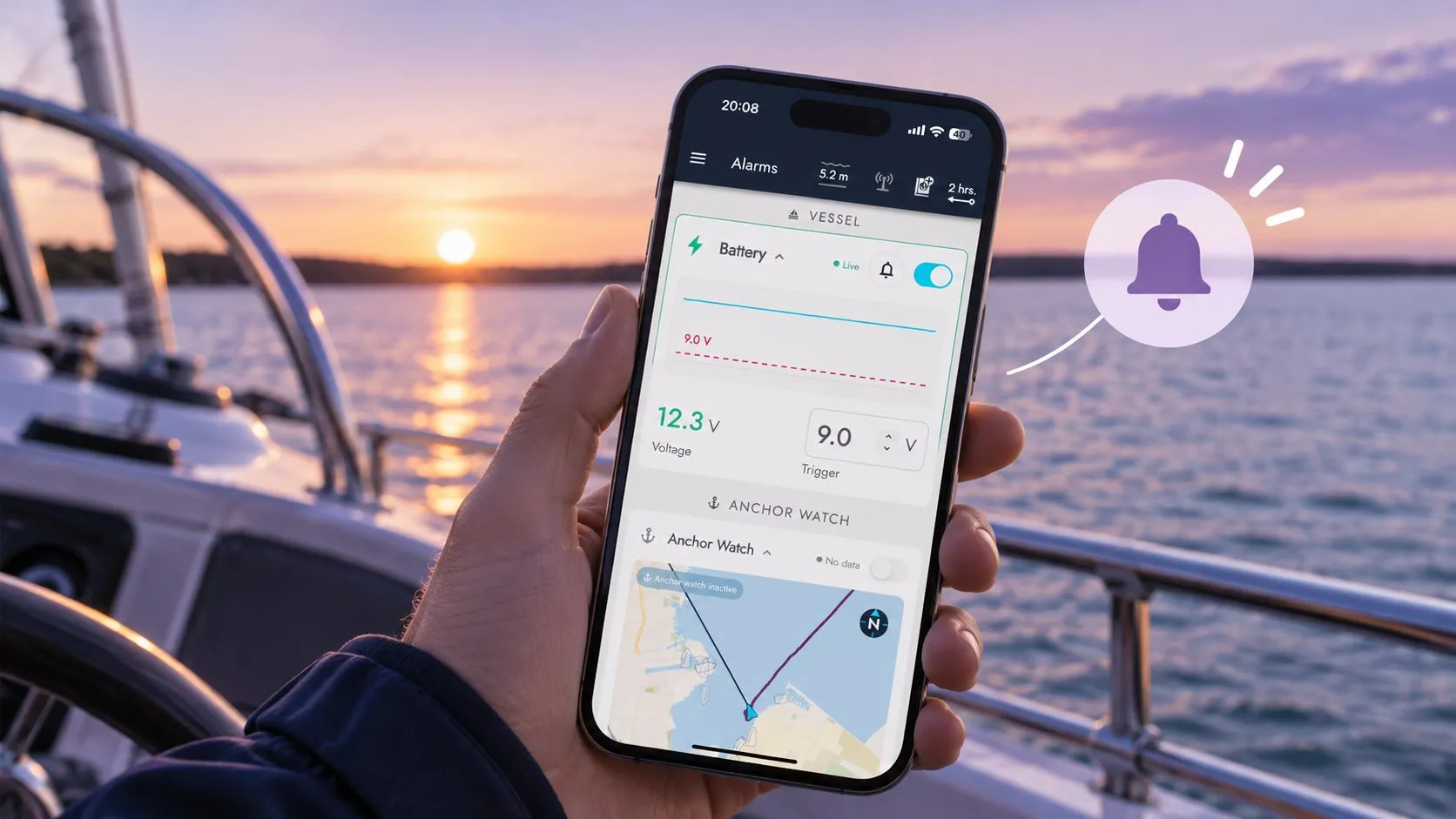 Sailing know-howBattery Monitoring on Board: Sail Safely Without Unexpected FailuresHow to avoid failures and keep an eye on your house battery, even from afar.approx. 5 min
 Sailing know-howThe Digital Logbook for Sailors: Smart Navigation and Memories That LastWhat a digital logbook does better than paper, and why it is more than a duty.approx. 4 min